


Autonomous lift trucks, also known as robotic forklifts or automated guided vehicles (AGVs), are transforming warehousing and manufacturing. As labor shortages persist and process efficiency is critical, these intelligent machines provide a scalable, safe, and affordable solution for material handling.
Top Workflow for Autonomous Lift Trucks
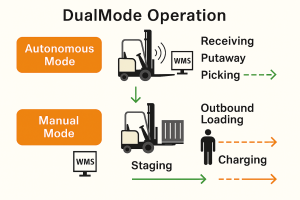
The most effective workflow for autonomous lift trucks usually follows a closed-loop material handling cycle, optimized for repetitive tasks and limited human intervention:
- Receiving and Putaway
- Autonomous trucks unload goods from inbound trailers.
- They transport pallets to designated storage locations using infrastructure-free navigation.

- Inventory Replenishment
- Lift trucks retrieve goods from storage and deliver them to picking zones.
- Integration with Warehouse Management Systems (WMS) ensures real-time inventory updates.
- Order Picking and Staging
- Autonomous tow tractors or stackers assist in moving picked items to staging areas.
- They can handle sequencing tasks for assembly lines or kitting operations.
- Outbound Loading
- Trucks autonomously load pallets onto outbound trailers.
- This reduces bottlenecks and leads to consistent throughput.
- Autonomous Charging and Maintenance
- Most systems include automatic charging stations that allow trucks to recharge during idle periods without human involvement.
Best Practices for Implementation
To maximize ROI and provide smooth integration, follow these best practices:
- Start Small: Pilot the technology in a single zone or workflow before expanding.
- Redesign Layouts: Adapt aisle widths, drop points, and lighting to suit automated navigation systems.
- Integrate with WMS/ERP: Ensure easy communication between robotic systems and inventory software.
- Train staff to interact with autonomous systems and troubleshoot basic issues.
- Monitor Performance: Use analytics to track uptime, throughput, and error rates.
Advantages of Autonomous Lift Trucks
✅ Labor Optimization
- Reduces dependency on human operators, especially for night shifts and repetitive tasks.
- Frees up skilled workers for higher-value roles.
✅ Increases Safety
- Minimizes accidents resulting from human error.
- Equipped with obstacle detection, emergency stop features, and exact navigation.
✅ Scalability
- Easily expandable as business needs grow.
- Dual-mode operation allows manual override when needed.
✅ Cost Efficiency
- Long-term savings on labor, training, and injury-related costs.
- Reduces product and infrastructure damage through precise handling.
✅ 24/7 Operation
- No breaks, fatigue, or absenteeism.
- Ideal for high-volume environments.
Disadvantages and Challenges
❌ High Initial Investment
- High upfront costs for equipment, software, and facility redesign.
❌ Integration Complexity
- Requires compatibility with existing systems and workflows.
- May need custom APIs or middleware for full automation.
❌ Reduced Flexibility
- Autonomous trucks follow programmed paths and may have difficulty with unexpected changes or non-standard tasks.
❌ Technology Downtime
- Like any tech, autonomous systems can experience breakdowns or software glitches.
❌ Change Management
- Staff may resist automation due to worries about job security.
- Requires cultural and operational shifts to embrace robotics.
Conclusion
Autonomous lift trucks are more than a trend—they’re a key investment in the future of logistics and manufacturing. By following best practices and understanding both the benefits and limitations, companies can improve efficiency, safety, and growth in their operations.
Contact Action Lift at 570-655-2100 to learn more about our Warehouse Automation Solutions.